一句话结论:2026-09-11;Commercial UAV Expo and the Internationalization of Uncrewed Aviation | Commercial UAV News;How ICAO is building global BVLOS standards as FAA Part 108 nears, and what harmonized dr…。
内容详情
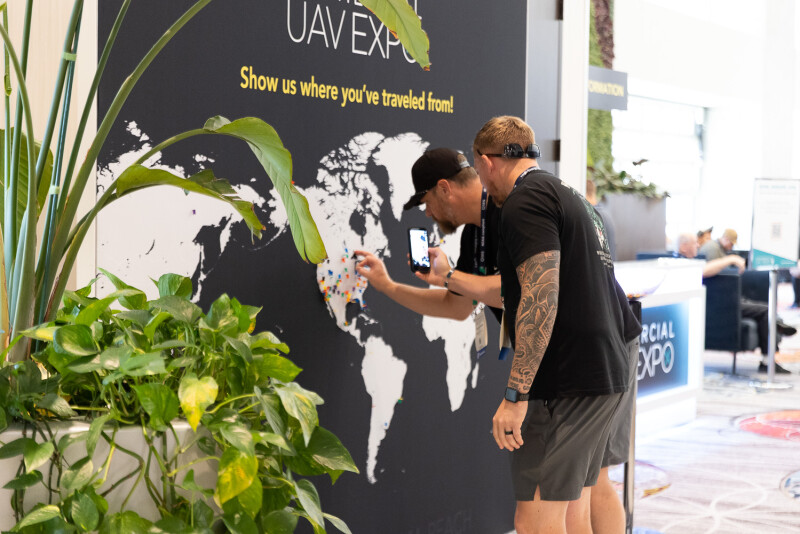
The information you submit will be stored and used to communicate with you about your interest in Commercial UAV News. To understand more about how we use and store information, please refer to our privacy policy . Commercial UAV Expo Commercial UAV Expo Last week, the uncrewed aviation industry came together in Las Vegas for Commercial UAV Expo to once again gather around the table to exchange ideas and to gain momentum as we rapidly move towards the official regulation that would allow flights beyond visual line of sight (BVLOS), not only in the U.S., but around the world. On Thursday, during the keynote to close out the final day of the event , Mr. Robert Reckert, Acting Division Manager, Emerging Technologies Division, Flight Standards Office of the Federal Aviation Administration (FAA), expressed confidence that the final Part 108 rule is approaching. “We are very confident that we believe we have the right rule moving forward, and we are hoping that we’ll see that rule published by the end of the calendar year.” In the summer of 2016, when the FAA issued Part 107, the entire world received a set of guidelines from the largest civil aviation authority, which was to be emulated (to certain geographical extents) worldwide. Ten years later, we have similar, but not copy/paste, rules for flights within the visual range of the operator (VLOS) all over the world. Now, with the forthcoming issuance of Part 108 and the authorization for BVLOS flights, the civil aviation authorities’ community is holding its breath to see what the U.S. is doing. The FAA's rule will be studied carefully, and undoubtedly some provisions will be emulated while others are ignored across different geographies worldwide. Ultimately, though, it will be the beginning of unification. The big difference between Part 107 and Part 108, apart from the obvious VLOS vs. BVLOS, is that, for the first time, international border crossing would be possible for non-piloted or remotely piloted aircraft system (RPAS). Of course, that requires organization and coordination between neighboring authorities, and those talks will likely happen under the auspices of the International Civil Aviation Organization (ICAO). For more than seven decades, ICAO has been the quiet architect behind the world’s most seamless transportation system. Crewed aviation works because ICAO made it work with standardized phraseology, harmonized procedures, interoperable licensing, and a shared operational language that lets a pilot depart from one continent and land on another without ever encountering a change in how aviation is conducted. Today, as uncrewed aircraft move from local operations into long‑range, autonomous missions, ICAO is once again being called to perform the same miracle, this time for drones. The industry is bracing for a shift that will redefine what drones can do. Under Part 108, operators and their aircraft become aviation participants, capable of flying long distances, integrating with airspace systems, and eventually crossing borders. Once that happens, harmonization becomes the backbone of global scalability. At Commercial UAV Expo, the growing presence of international regulators and operators clearly showed that the world understands this. The industry is already converging around shared terminology, shared expectations, and shared safety logic. ICAO is the institution positioned to turn that convergence into a unified global system. ICAO’s work on uncrewed aviation did not begin with BVLOS. More than a decade ago, the organization laid the groundwork with its RPAS Standards and Recommended Practices, centered around the Manual on Remotely Piloted Aircraft Systems (Doc 10019) . This document established the first global principles for integrating drones into the aviation ecosystem. It defined how remote pilots should be licensed, how command‑and‑control (C2) links should perform, how detect‑and‑avoid (DAA) systems should behave, and how RPAS should interact with traditional air traffic management. In essence, it created the global equivalent of Part 107, a baseline that member states could adapt while maintaining interoperability. However, BVLOS flights require a digital ecosystem that can manage high‑density drone operations without relying on traditional air traffic control. This is where ICAO’s Uncrewed Traffic Management (UTM) Framework enters the picture. Now in its fourth edition, the framework outlines how these systems should function, exchange data, and integrate with conventional Air Traffic Management (ATM). It is intentionally flexible, allowing countries to build UTM systems tailored to their needs while maintaining global compatibility. Europe, Canada, Australia, Latin America, and Africa are already using it as a blueprint. In many ways, the UTM Framework is the global precursor to Part 108. It provides the architecture for BVLOS operations at scale, ensuring that drones can be managed safely, efficiently, and consistently across borders. The most significant development in ICAO’s recent work is the growing recognition that guidance alone is not enough. As BVLOS operations expand, national UTM systems risk evolving independently, creating fragmentation that could hinder cross‑border operations. ICAO has responded by moving toward more formal, binding standards. A recent Assembly working paper called for creating SARPs or PANS specifically for UTM, establishing a dedicated study group for UTM–ATM integration, and coordinating regional pilot projects to accelerate harmonization. This shift reflects a broader truth:BVLOS is inherently international. Pipelines cross borders. Power grids span regions. Emergency response corridors link neighboring countries. Logistics networks operate globally. Once drones begin flying these missions autonomously, they will need the same level of interoperability that crewed aviation has enjoyed for decades. Part
取证时间线
- 原始发布/事件日期:2026-09-11
- 本站采集时间:2026-09-14 22:06:50
- 信息核验时间:2026-09-14 23:56:39
- 页面最后更新:2026-09-14 23:56:39
栏目与背景
本栏目按时间线记录低空经济与 eVTOL 产业的重要动态,包括取证、融资、运营、政策、合作与产品发布等事件。事件条目由官方新闻与行业媒体交叉核对后收录,标注事件时间与信息来源,供产业研究者追踪最新进展与趋势。事件时效性强,数据库会对超出时效窗口的条目自动标记复核状态;每条动态均附原文链接,便于回溯一手信息。
本条目由 NovaAero 数据核验组 基于以下流程维护:采集 → 信息验证 → SEO/GEO 加工 → 在线发布;其中验证分值与状态见文首与来源声明,时间线如上。
数据使用与检索指引
本条目的结构与使用说明:本站以「采集 → 信息验证 → SEO/GEO 加工 → 在线发布」流程维护每条内容,正文按「一句话结论、内容详情、关键信息、对比表格、取证时间线、常见问题」组织,便于直接取材引用;每条信息均附原始来源链接与核验状态,引用时建议同时标注本网站名与原文出处。若您关注的字段在本页未展示,可能是源数据未公开或尚未完成增量采集更新,可通过栏目列表页的检索入口定位其他相关条目,或通过原文链接回溯权威信源;数据库每日 09:00 增量采集,新出现的动态会在当日更新入库并重算本页。
延伸阅读
以下为本站同栏目收录的相关条目,可继续阅读:
- 亿航智能亮相ICAO亚太民航局长会议,输出Fast Track方案加速全球合作(event-419cddd373)
- 美国联邦参议员史蒂夫·戴恩斯与中国人民外交学会副会长耿爽到访亿航,并搭乘EH216‑S飞行器体验飞行(event-60df25ddc9)
- 亿航智能EH216-S完成香港公开首飞,携手特区政府加速推进“监管沙盒X”低空新范式(event-9ecfe18e4c)
- 亿航智能携手中建六局布局低空基建,海南临高低空走廊项目率先动工(event-fd45222e36)
- 亿航智能推出全球Fast Track计划,加快无人驾驶eVTOL国际化商业化落地;斯里兰卡成为首个…(event-ae97a01414)
- 美团无人机在深圳航网快速加密部署,已开通 50 余条运营航线(event-39b79a9824)
常见问题
这起低空产业动态的核心事件是什么?
核心事件为:2026-09-11;Commercial UAV Expo and the Internationalization of Uncrewed Aviation | Commercial UAV News;How IC…
事件发生在什么时间、由哪家机构发布?
事件时间为 2026-09-11,信息由 Commercial UAV News 报道/发布,属于 事件流栏目内容。
该动态对低空经济/eVTOL 产业意味着什么?
该信息反映 Commercial UAV Expo and the Internationalization of Uncrewe… 的最新进展,可作为 事件流领域动态参考,建议结合原文与相关新闻交叉了解产业趋势。
信息来源:Commercial UAV News(可信级:INDUSTRY(行业媒体)),数据截至 2026-09-11;核验状态:single_source(单源可信)(评分 71)。原文链接:https://www.commercialuavnews.com/icao-bvlos-harmonization-part-108-drone-regulation;privacy policy;Search;Commercial UAV Expo。内容由 NovaAero 采集核实,仅供行业参考。本站最后核验:NovaAero 数据核验组@2026-09-14 23:56:39。